
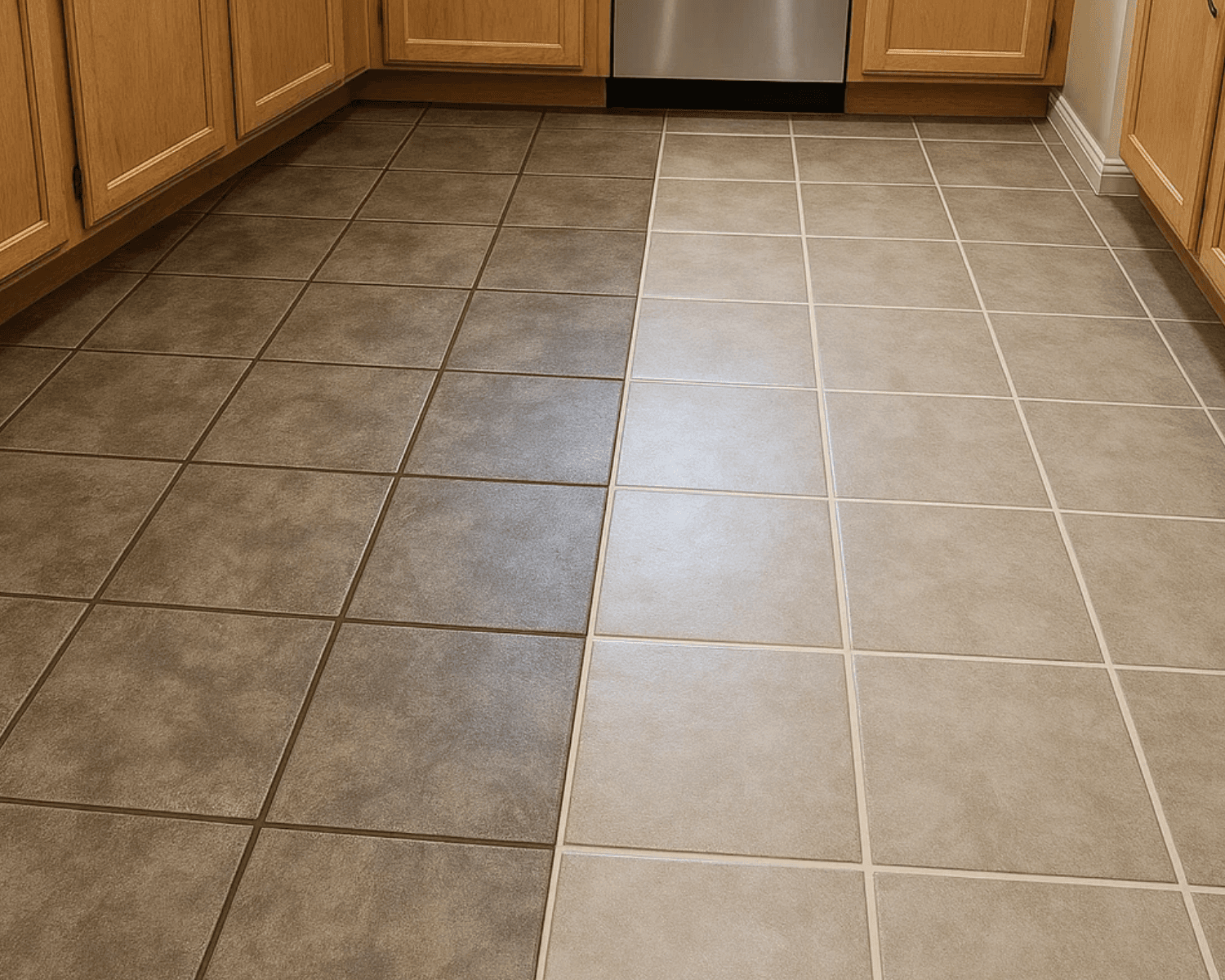
Mop the tile floor every week for five years and the tile will look fine. The grout won't. Those narrow lines between tiles are porous, and they absorb everything your mop pushes across them. Dirty mop water, soap residue, red clay dissolved in tracked-in rainwater, cooking grease that drifted down from the stove. Year after year, those deposits build inside the grout pores until the lines go from light gray or white to a dingy brown that no amount of scrubbing on your hands and knees will fix.
That's not damage — it's accumulation. And it comes out. We clean tile and grout in Aiken homes with professional-grade grout chemistry worked deep into the porous lines by a rotary floor buffer. The tile cleans up in the process, but the grout is where people see the real change. Kitchen floors that look ten years younger in ninety minutes.
Why Aiken grout goes dark faster
Two local factors make grout problems worse here than in drier, sandier regions:
Red clay in solution. Clay dissolves in moisture and runs into grout lines. The particles are finer than grout pores and stain from within. That rust-orange tint in your entryway? Hundreds of mop passes depositing clay-tinted water.
Humidity-driven mold and mildew. Aiken bathrooms stay damp. Shower grout rarely dries fully between uses. Mold colonizes the pores and produces black staining that bleach treats temporarily but doesn't remove. Here, it happens within months of fresh grouting.
Where tile and grout cleaning has the biggest impact
Kitchen floors
Cooking splatter settles daily. Mop water pushes dissolved food soil into grout hundreds of times per year. The zones around the stove and between the fridge and sink show it worst. These clean up dramatically because the darkening is embedded soil, not structural damage.
Bathrooms
Constant moisture, soap scum, body oils, and inadequate drying create mold-friendly grout conditions that ventilation can't fully prevent in this climate.
Entryways and mudrooms
Entryway grout absorbs red clay, sandy grit, and pine needles daily. In equestrian households with dog doors, mudroom grout goes dark in months rather than years.
Older Aiken homes
Many historic district houses have original tile with decades of grout soil that homeowners assume is permanent. A professional buffer cleaning usually brings it back to near-original color.
The 5-step tile and grout cleaning process
1. Inspection and tile identification
We assess tile type, grout condition, and problem areas. Cracked or missing grout gets noted, because cleaning can't fix structural failure. We also identify natural stone that requires pH-neutral products.
2. Alkaline pre-treatment with dwell time
We apply a grout-specific cleaner and let it dwell. This is where DIY falls short. People spray and immediately scrub. The chemistry needs minutes to penetrate pores before mechanical action begins. Natural stone gets pH-neutral chemistry to avoid etching.
3. Floor buffer scrubbing
A rotary floor buffer drives the solution down into the tile and grout. The spinning brush drops into the recessed grout lines a flat mop glides straight across, breaking the bond between soil and grout pores. On heavily soiled floors — ten-plus years of accumulation, red clay, grease — this step produces the biggest visual change.
4. Rinse and mop-up
Once the buffer has done its work, we rinse the floor and mop up the spent solution along with everything it lifted. Grout sits lower than the surrounding tile, which is why your own mopping never touched this soil. The buffer scrubbed at grout level, and the rinse carries the grime away.
5. Inspection and walkthrough
We go over the finished floor with you, note any grout that responded differently, and wipe baseboards and edges.
Types of tile we work with
Ceramic and porcelain. Most common, most straightforward. Both handle our standard chemistry and respond well.
Natural stone (marble, travertine, slate, limestone). pH-neutral products only, because acid or strong alkaline etches these surfaces. Travertine has natural pits that trap dirt. Marble is the most sensitive. We discuss specifics on the phone before scheduling.
Terracotta and saltillo. Soft, porous tiles with topical sealers. The wrong approach strips the coating. Case-by-case assessment before committing.
Maintaining results between cleanings
Use pH-neutral cleaners. Bleach knocks back mildew for a week or two, then the staining returns while the harsh chemistry wears on the grout.
Rinse after mopping. Soap film left on grout builds up the same way dirt does.
Address mildew early. Dark spots in bathroom grout are easier to treat before mold goes deep.
Annual professional cleaning for kitchens and bathrooms. Every two years for lower-traffic areas.
When you want the longer explanation
Some homeowners want more than a service page. Tile Done Right, Safe-Dry's national tile and grout site, covers the questions we only touch on here, like why kitchen grout darkens fastest near the stove and what makes shower lines go black in months. Browse the grout line restoration guides there before your appointment if you like knowing what's happening under your mop.
Frequently Asked Questions
How long does the whole process take?
A kitchen and one bathroom together runs ninety minutes to two hours. A full ground floor of tile in a larger home is closer to three or four hours. You can walk on the tile immediately after. It's barely damp.
Will this get the orange-red color out of my entryway grout?
In most cases, yes. Clay particles sit in the pores rather than bonding to the grout material. Long-standing staining may leave a faint warmth, but the improvement is dramatic.
Why does the buffer work when my mop doesn't?
Grout sits below the tile surface. A flat mop bridges across the tiles and skims the top of each line, while the buffer's bristles drop down into the recess and scrub the grout itself. That direct contact, plus the right cleaner, is what lifts the discoloration out.
Can you fix cracked or missing grout?
Cleaning can't repair structural damage. If grout is crumbling, missing, or cracked, that's a regrouting job. We'll note any areas that need repair during our inspection. Often a few small areas need attention while the rest of the floor just needs cleaning.
Can I combine this with carpet cleaning?
Yes. Many customers book tile and carpet cleaning or tile and hardwood cleaning in the same visit when they're doing a whole-house refresh. We'll coordinate the sequence for best results.
Book tile and grout cleaning
Call 803-310-3848 or schedule online. We clean tile floors across Aiken, North Augusta, Graniteville, and every Aiken County community on our route. If you've been mopping for years and the grout keeps getting darker, one appointment fixes what a thousand mop passes couldn't.