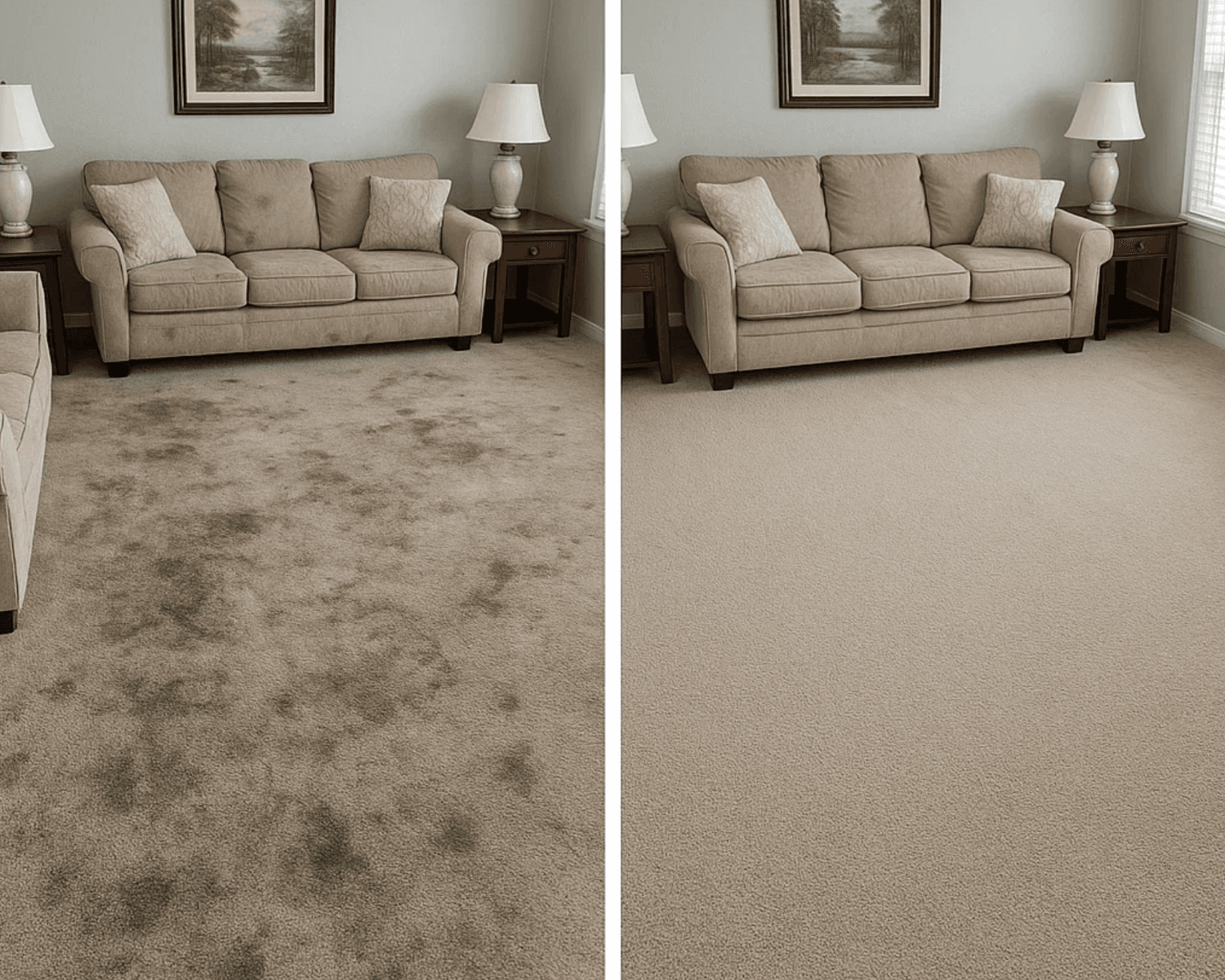
Red clay doesn't knock before it comes in. If you live anywhere in Aiken, you know the drill. One rainy afternoon and every shoe in the house tracks that rust-orange soil straight into the carpet. Add the sandy grit from horse district roads, pollen that blankets cars from February through October, and humidity that turns a damp carpet pad into a mildew starter kit. That's what carpet in this town is up against.
We clean carpets with a low-moisture, carbonated system that gets the dirt out and lets you walk on the floor in about an hour. No steam, no gallons of hot water soaking through to the pad, no waiting twelve hours with fans blowing. In a climate where the air itself is wet half the year, drying speed isn't a luxury — it's how you avoid creating a bigger problem than you started with.
The red clay problem
Steam cleaning soaks carpet and pad with water that picks up clay particles and pushes them deeper before extraction tries to pull them back. What it misses stays in the pad, sitting damp for hours in Aiken's humidity.
Our carbonated system lifts particles to the surface with micro-bubbles. We extract them at the fiber level without flooding the backing. The pad stays dry. The clay comes out. If you've had carpet cleaned before and noticed a musty smell afterward, that was the pad holding moisture too long. You won't get that with us.
Our 6-step cleaning process
1. Walk-through and inspection. We look at everything before we touch anything. Fiber type, pile condition, stain locations, traffic patterns. You show us what bothers you — the back door hallway caked with grit, the wine stain from December, the spot where the cat decided the litter box was too far. We tell you what's fixable and what's probably permanent fiber damage. Straight answers before money changes hands.
2. Pre-treatment of problem zones. High-traffic lanes, visible stains, and ground-in soil get a targeted application that loosens what vacuuming can't reach. Red clay stains get their own approach because clay bonds to carpet fiber differently than organic soil. Pet spots get enzyme chemistry. Each stain type gets the product that actually works on it, not a one-size spray.
3. Carbonated deep clean. Here's where the work happens. Our patented cleaning solution (hypoallergenic, non-toxic, no soap residue) produces carbonation that agitates soil at the fiber level. High-RPM floor machines drive the solution into the pile. Cleaning pads capture the loosened dirt, clay, pollen, and oils. No water pooling. No soaked backing. No moisture reaching the subfloor.
4. Targeted spot and odor work. Anything that survived step two and three gets individual attention. Oxidizers for coffee and wine. Enzymes for biological stains. A second pass on stubborn traffic lanes. We don't clean over a problem spot and hope you don't notice.
5. Fiber protection (optional). A stain-resist treatment that makes future spills bead up instead of absorbing instantly. Good for households with kids or pets, less necessary on newer carpet that still has factory protector. We only suggest it when it'll actually help.
6. Grooming and dry time. We brush the carpet nap back into a uniform direction and check the results. The carpet feels slightly damp, like touching a dry towel that sat in a steamy bathroom. Walk on it immediately. Full dry in thirty to sixty minutes. Heavy furniture goes back once the backing is done, but nothing's going to stain or transfer in the meantime.
Why Aiken carpets need this approach specifically
This isn't a generic pitch about clean floors. The local conditions create specific problems that our method handles better than steam:
Pollen saturation. Pine pollen runs February through late April, depositing film on every indoor surface. Carpet acts as a filter, but saturated filters stop working. Annual cleaning resets that.
Horse farm particulate. Near Hitchcock Woods, Whiskey Road, or the training tracks, sandy grit comes inside constantly. It sits in fibers and gets ground in with every step, cutting from below. The difference between carpet lasting twelve years and looking worn at five.
Humidity-driven mildew. June through September, humidity regularly hits 85-90%. A steam-cleaned pad left damp for hours in those conditions is a mildew risk. Our method keeps the pad dry.
Pet household density. The equestrian community means dogs, lots of them. Indoor-outdoor dogs tracking through muddy paddocks, then lounging on carpet. If pet odor is your main concern, we'll tell you whether standard cleaning handles it or whether our dedicated pet treatment is the better call.
What cleaning costs you vs. what replacement costs
Recarpeting a three-bedroom home in Aiken runs $4,000 to $7,000. Professional cleaning once or twice a year costs a fraction of that and genuinely extends carpet life. Manufacturers recommend professional cleaning every twelve to eighteen months for warranty compliance.
Every technician is trained, certified, and insured. They know Aiken homes, know what red clay does to beige carpet, and know the difference between equestrian household conditions and standard residential wear. If you're not satisfied with the results, call us back. We'll return and re-treat at no charge.
Frequently Asked Questions
How long before I can put furniture back?
Walk on the carpet right away. Lightweight furniture can go back within an hour. For heavy pieces — bookshelves, entertainment centers — give it two to three hours so the backing finishes drying. We place protective pads under legs regardless.
Will this get red clay stains out completely?
Fresh clay tracking comes out well. Set-in clay that's been walked over for months may leave a faint shadow if it's bonded with the fiber dye. We'll tell you during the inspection what to expect. Most clay responds on the first visit.
How is this different from the steam cleaning trucks I see around town?
Steam cleaning pushes four to five gallons of hot water into your carpet per room and tries to vacuum most of it back out. Ours uses about 95% less moisture. The practical difference: we're done faster, your carpet dries in under an hour instead of overnight, and there's no mildew risk from a wet pad sitting in Aiken humidity.
Do I need to vacuum before you arrive?
A quick vacuum helps but isn't required. We handle dust removal as part of the process. If you can get the big debris up (cereal, dog food, leaves tracked in), that saves time, but don't stress about it.
How often should I have carpets cleaned in this climate?
Once a year minimum. Every six months if you have pets, kids, or someone with allergies. Homes near unpaved roads or horse farms benefit from a spring cleaning after pollen season and a fall cleaning before you close the house up for winter.
Schedule your appointment
Call 803-310-3848 or book online. We serve Aiken, North Augusta, Graniteville, New Ellenton, and all surrounding Aiken County communities. Same-day availability is common. One hour of your afternoon, and the carpet looks like it did when you picked the color.