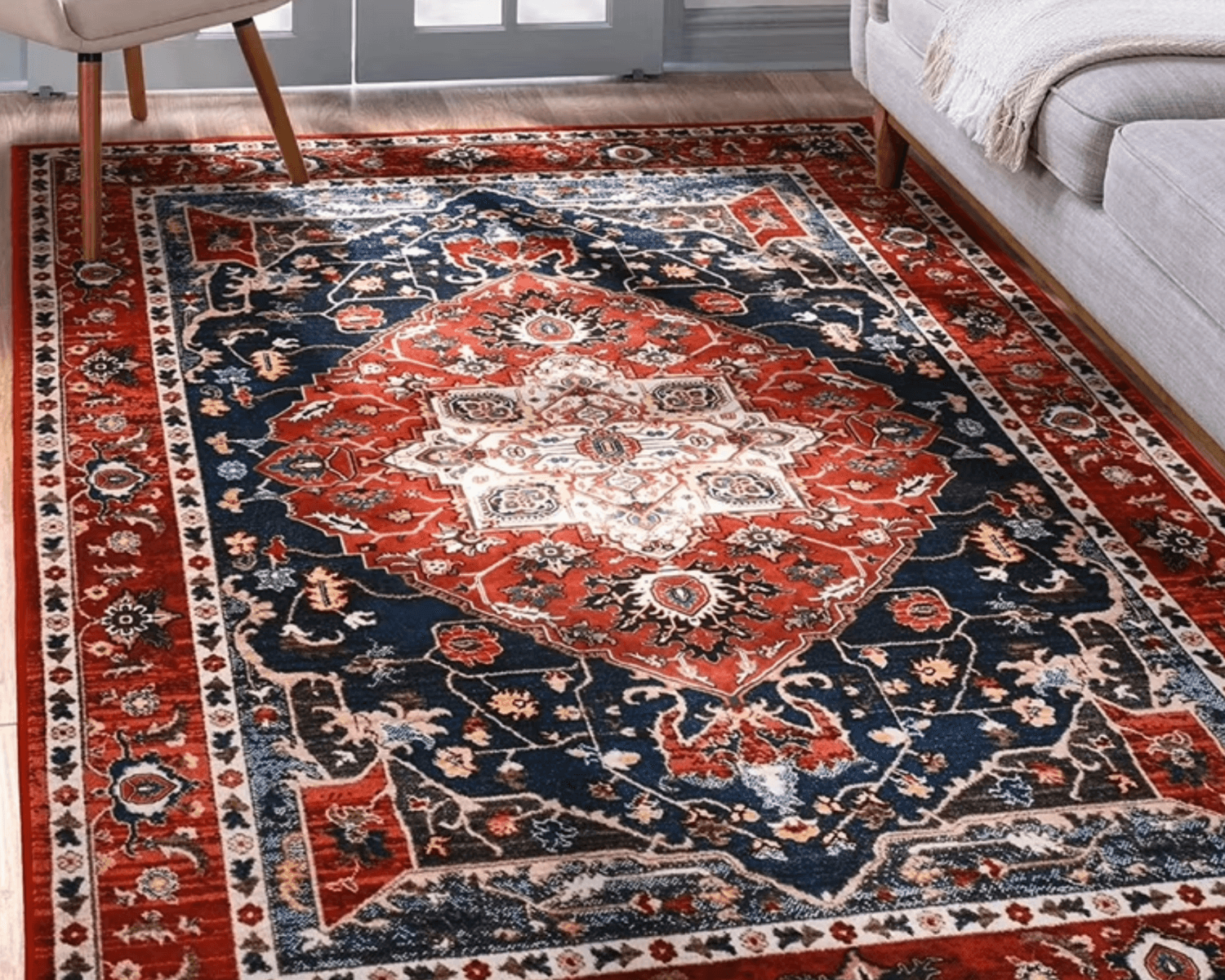
Aiken has more valuable hand-knotted rugs per capita than most towns this size. The historic homes on South Boundary, the estates along Berrie Road, the century-old residences in the Winter Colony. These houses were built by people who invested in fine textiles, and many of those original rugs are still in service. We also see newer acquisitions from families who've moved into restored homes and furnished them to match the architecture. Either way, the rug on your floor might be worth more than the car in your driveway, and it deserves someone who knows the difference between a Tabriz and a tufted knockoff.
We clean oriental rugs in your home using a carbonated, chemical-free process built for exactly these textiles. No steam, no immersion, no detergent residue. For most hand-knotted rugs in good condition, in-home cleaning delivers excellent results with less handling risk than transporting the rug to a facility. For pieces that genuinely need a full submersion wash (deep urine contamination, moth damage, structural weakness), we'll tell you before we begin.
Why oriental rugs demand a specialized approach
Natural dyes can bleed. Vegetable dyes in antique Persian rugs behave unpredictably with wrong moisture levels. Cotton foundations absorb water. Most Persian and Indian rugs have cotton warp threads that swell and invite mildew in Aiken's humidity. Knot structure varies. A packed Bijar handles agitation differently than a loose tribal piece. Age creates fragility. Fifty-year-old foundation threads can be brittle. We check for all of this before starting.
Our 6-step oriental rug cleaning process
1. Assessment and identification
We flip the rug, study the knot structure, check the foundation for dry rot, examine fringe, and identify the specific type. We test dyes in an inconspicuous area. If a color runs during testing, we use an even drier method or recommend facility cleaning. For a valuable piece, proper assessment takes several minutes and prevents irreversible problems.
2. Mechanical dusting and pre-treatment
Sand, clay, and pollen work between knots where vacuum suction can't reach. Every footstep grinds that grit against wool fibers, slowly cutting them. We mechanically agitate the rug to release deep-seated particulate, then pre-treat visible stains with a wool-safe, pH-neutral solution.
3. Carbonated cleaning with controlled moisture
Our carbonated solution generates micro-bubbles that lift dirt upward through the pile. We work with the nap direction, because going against the grain creates appearance inconsistencies on hand-knotted pieces. A fraction of the moisture of steam cleaning means the foundation stays dry, dyes don't run, and your hardwood underneath stays safe.
4. Spot and odor treatment
Individual stains that didn't fully respond get targeted follow-up. Wine, food, coffee, and cosmetics each have specific chemistry. Pet odors at the surface level respond to enzyme treatment applied carefully to avoid over-wetting the foundation.
If we find pet urine has penetrated to the foundation, that's a different conversation. Surface odor is treatable in-home. Deep foundation contamination may need our pet odor service or, in severe cases, a controlled plant wash. We'll tell you honestly which situation you're in.
5. Gentle extraction and controlled drying
We extract spent solution without aggressive suction that could stress delicate fibers. The rug is left slightly damp at the tips, drying in two to four hours. No residue remains. A clean rug should look brighter, not sticky.
6. Grooming and condition report
We brush the pile into its natural direction, restoring the light-play that gives hand-knotted rugs depth. Then we report anything noticed: early moth damage, foundation wear, fringe deterioration, or previous repairs that became visible once soil lifted.
Rug types we regularly clean in Aiken
Persian (Tabriz, Kerman, Isfahan, Heriz, Sarouk, Kashan), Turkish and Anatolian village rugs, Caucasian geometrics (Kazak, Shirvan), Indian hand-knotted wool and silk, Pakistani Bokhara, Chinese silk, Afghan and Turkmen weavings, and contemporary hand-knotted designer rugs.
If you're unsure what you have, the back of the rug tells us everything we need to know. You don't need to be a rug expert before calling.
In-home vs. facility cleaning
In-home cleaning works for most oriental rugs in Aiken. It eliminates transportation risks and delivers same-day turnaround. Facility cleaning makes sense when deep urine has saturated the foundation, the rug is extremely high-value, moth damage is active, or the foundation is fragile enough to need controlled flat-drying. We'll give you an honest opinion based on what the rug actually needs.
Protecting your investment between cleanings
Use a quality rug pad designed for oriental rugs. Prevents sliding, cushions the foundation, allows air circulation. Cheap rubber pads can off-gas and stain rug backs.
Vacuum with suction only, no beater bar on hand-knotted pieces. Vacuum in the pile direction.
Rotate twice a year to even out sun exposure and traffic wear.
Blot spills immediately. Clean white cloth, cold water, outside in. Don't scrub. Call us if you're unsure — free advice on the phone.
Annual professional cleaning for high-traffic pieces. Every eighteen to twenty-four months for lighter-use rooms.
Frequently Asked Questions
How do I know if my rug is a genuine hand-knotted oriental?
Flip it over. If the pattern is clearly visible on the back with individual knots, it's hand-knotted. Machine-made rugs show a uniform mesh backing. Hand-tufted rugs have a fabric or latex backing covering the loops. We can identify it for you during a call or at the appointment.
Will cleaning change the patina on my antique rug?
Good cleaning preserves patina. We're removing surface grime, not stripping the aged character of the wool. Colors may look brighter because dirt was muting them — but that's the original dye showing through, not a change to the fiber.
My rug has moth holes. Should I clean it first or repair it first?
Clean first. Cleaning removes moth larvae and eggs that may still be present, and it reveals the full extent of damage so a repair specialist can assess accurately. We'll note all affected areas during our inspection.
Can you clean a rug that's been in storage?
Yes, and we recommend it. Rugs stored in attics, garages, or closets often harbor moth larvae, dust mites, and musty odors from stagnant air. Cleaning before putting the rug back into use is a smart step.
What does oriental rug cleaning cost compared to regular rug cleaning?
Slightly more, because the inspection, testing, and adjusted technique take additional time and care. We quote based on the rug's size, fiber type, and condition. Call us at 803-310-3848 for a specific number.
Book oriental rug cleaning
Call 803-310-3848 or schedule online. We clean oriental rugs across Aiken, North Augusta, and all of Aiken County. If you're not sure whether your piece needs our oriental service or our standard area rug cleaning, describe it when you call. We'll point you the right direction.